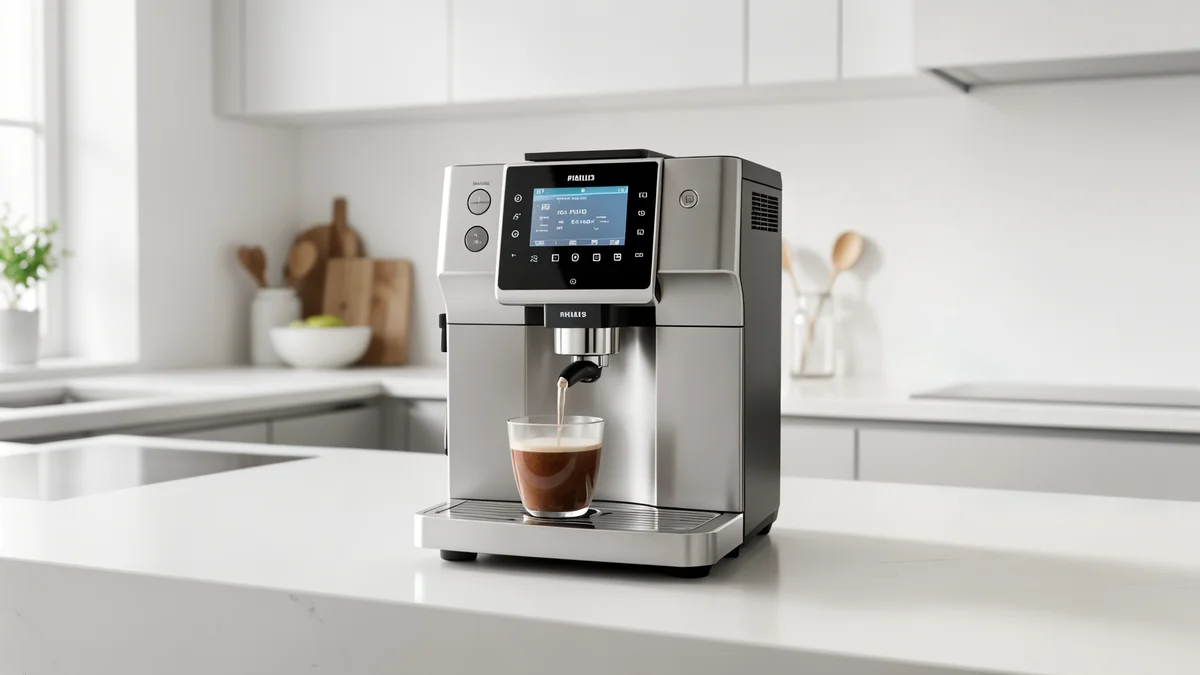
What Causes Brewing Too Slow?
Saeco super-automatics feature removable brew groups that must be rinsed daily.
- Maintenance neglect: Irregular descaling and cleaning are the top causes.
- Component wear: Seals, gaskets, and pumps degrade with use.
- Water quality: Hard water causes scale that blocks sensors and heating elements.
- Model-specific issues: Philips Saeco not turning on has known patterns in Series 3200, Series 5400, PicoBaristo.
Step-by-Step Fix
Follow these steps specifically for Philips Saeco machines:
- Check that the 🔵 Philips Saeco power cord is firmly seated in both the machine and wall outlet.
- Test the outlet with another device. If the outlet has power, inspect the Philips Saeco power switch for damage.
- Perform a hard reset: unplug the Philips Saeco machine for 60 seconds, then reconnect. This clears temporary control board faults.
- If still dead, the internal thermal fuse or power supply module may need replacement. Contact Philips Saeco service.
Philips Saeco Pro Tip
Expert advice: Series 3200 owners: unlock the brew group by pressing both side buttons simultaneously.
Model-Specific Notes
These steps apply to: Series 3200, Series 5400, PicoBaristo, Xelsis, HD7751. For exact part numbers, consult the Philips Saeco parts catalog at Philips Saeco Support.
Preventive Maintenance
Replace the water filter every 2 months to prevent E05 air-lock errors.
- Use filtered water to reduce scale buildup
- Clean the brew group weekly
- Replace water filters as recommended
- Run cleaning cycles for milk systems monthly
Popular Philips Saeco Models
When to Call a Professional
If these steps don't resolve the issue, contact an authorized Philips Saeco service center. Complex electrical or hydraulic problems require professional diagnosis.