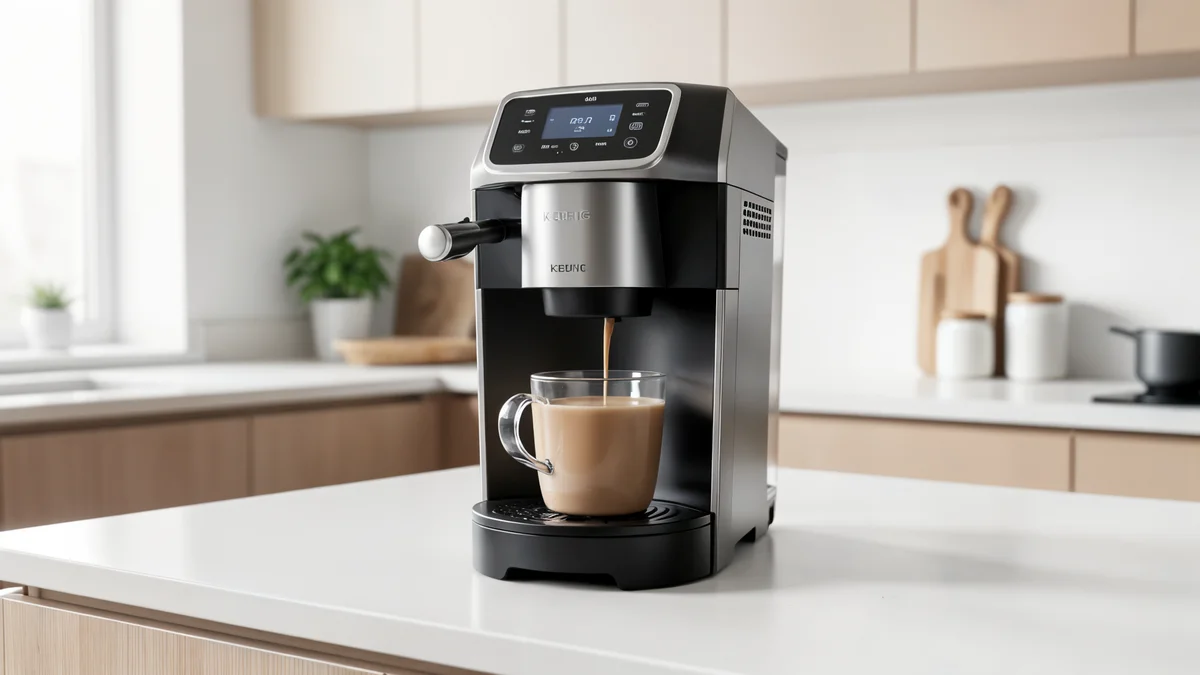
About Keurig Coffee Machines
Keurig machines rely on K-Cup puncture needles and water flow sensors that are prone to clogging. Keurig machines are popular worldwide for their reliability and innovation. This guide covers troubleshooting for all major Keurig models sold in North America, Europe, and Asia.
Supported Models
| Model | Status |
|---|---|
| K-Elite | Supported |
| K-Supreme | Supported |
| K-Duo | Supported |
| K-Mini | Supported |
| K-Classic | Supported |
| K-Select | Supported |
| K-Café | Supported |
Common Keurig Problems
Based on repair forums and service reports, the most frequent Keurig issues are:
- Needle clog
- Descaling needed
- Water not heating
- Brew interruption
- Prime the machine
Preventive Maintenance Schedule
Keep your Keurig machine running smoothly with this schedule:
- Daily: Empty drip tray, rinse steam wand, wipe exterior
- Weekly: Clean brew group, empty coffee grounds container
- Monthly: Clean water tank, inspect seals and gaskets
- Every 2-3 months: Descale with Keurig-approved solution every 3-6 months.
- Every 6 months: Deep clean internal components, replace water filter
Expert Tip
Pro advice: K-Elite and K-Supreme users: clean the exit needle after each use to prevent spray.
When to Call a Professional
If basic troubleshooting doesn't resolve the issue, contact an authorized Keurig service center. Complex electrical or hydraulic problems require professional diagnosis. Visit Keurig Support for official help.