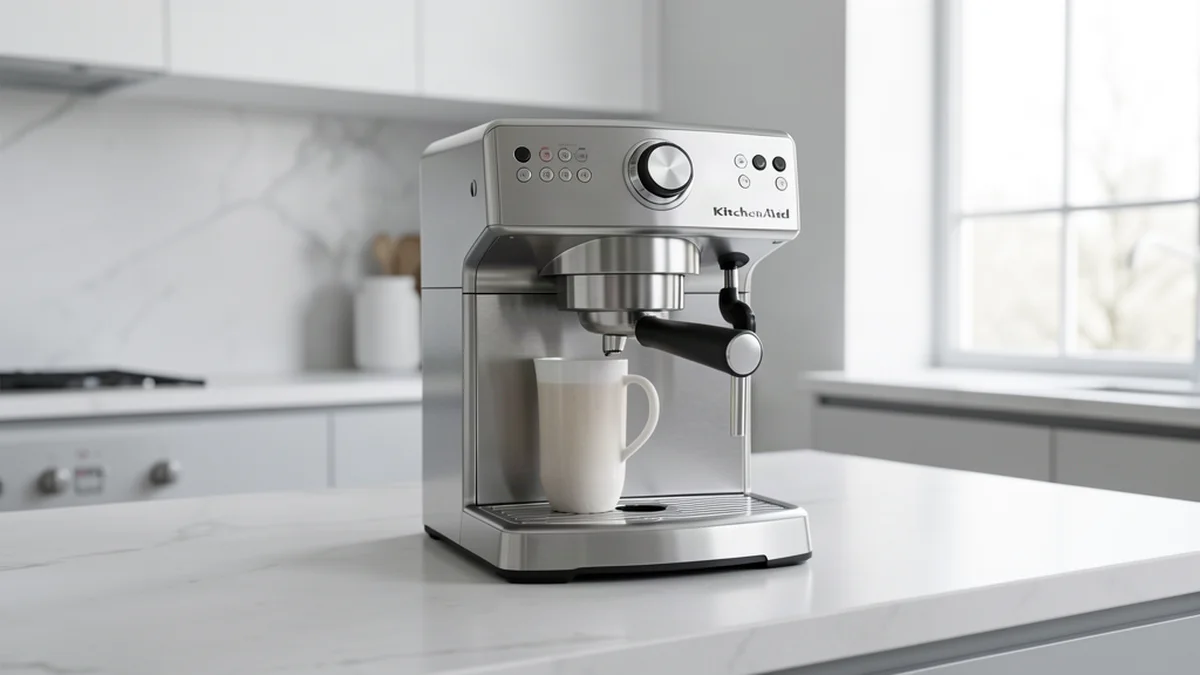
What Causes Not Heating?
KitchenAid coffee makers feature programmable timers and thermal carafes.
- Maintenance neglect: Irregular descaling and cleaning are the top causes.
- Component wear: Seals, gaskets, and pumps degrade with use.
- Water quality: Hard water causes scale that blocks sensors and heating elements.
- Model-specific issues: Kitchenaid not heating has known patterns in KCM111, KCM120, KCM140.
Step-by-Step Fix
Follow these steps specifically for Kitchenaid machines:
- Descale the Kitchenaid boiler using an approved descalant. Limescale is the #1 cause of heating failures.
- Test the NTC temperature sensor with a multimeter. On Kitchenaid machines, a faulty sensor shows infinite resistance.
- Inspect the heating element for calcium deposits. If resistance is out of spec, replace the element.
- After descaling, run 3 empty brew cycles to purge air from the heating chamber.
Kitchenaid Pro Tip
Expert advice: KCM111 users: if Err1 appears, press and hold the brew button for 10 seconds to reset.
Model-Specific Notes
These steps apply to: KCM111, KCM120, KCM140, KCM150, KCM300. For exact part numbers, consult the Kitchenaid parts catalog at Kitchenaid Support.
Preventive Maintenance
Wash the carafe with mild detergent weekly to prevent bitter taste.
- Use filtered water to reduce scale buildup
- Clean the brew group weekly
- Replace water filters as recommended
- Run cleaning cycles for milk systems monthly
Popular Kitchenaid Models
When to Call a Professional
If these steps don't resolve the issue, contact an authorized Kitchenaid service center. Complex electrical or hydraulic problems require professional diagnosis.