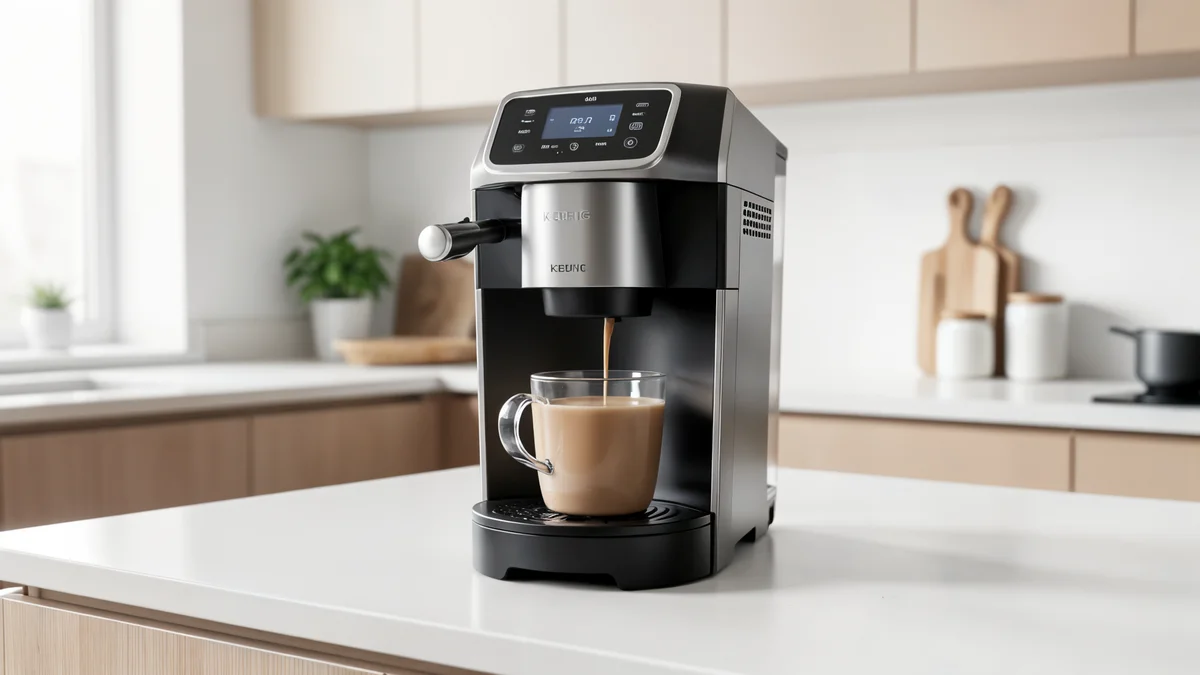
What Causes Coffee Too Weak?
Keurig machines rely on K-Cup puncture needles and water flow sensors that are prone to clogging.
- Maintenance neglect: Irregular descaling and cleaning are the top causes.
- Component wear: Seals, gaskets, and pumps degrade with use.
- Water quality: Hard water causes scale that blocks sensors and heating elements.
- Model-specific issues: Keurig coffee too weak has known patterns in K-Elite, K-Supreme, K-Duo.
Step-by-Step Fix
Follow these steps specifically for Keurig machines:
- Increase grind size on your Keurig. Start with one coarser setting and test.
- Verify brew temperature. Keurig machines should reach 90-96°C for proper extraction.
- Check pump pressure. Use the Keurig pressure gauge if equipped; target 9-15 bar.
- Use beans roasted within 2-4 weeks. Stale beans produce weak, flat coffee.
Keurig Pro Tip
Expert advice: K-Elite and K-Supreme users: clean the exit needle after each use to prevent spray.
Model-Specific Notes
These steps apply to: K-Elite, K-Supreme, K-Duo, K-Mini, K-Classic. For exact part numbers, consult the Keurig parts catalog at Keurig Support.
Preventive Maintenance
Descale with Keurig-approved solution every 3-6 months.
- Use filtered water to reduce scale buildup
- Clean the brew group weekly
- Replace water filters as recommended
- Run cleaning cycles for milk systems monthly
Popular Keurig Models
When to Call a Professional
If these steps don't resolve the issue, contact an authorized Keurig service center. Complex electrical or hydraulic problems require professional diagnosis.